When you think of the Highlands and Islands of Scotland, what comes to mind? Perhaps it’s the rugged landscapes, the bagpipes, or the rich tapestry of history and culture. One tradition that encapsulates all of these elements is crofting. But what is it, and how did it become a cornerstone of Scottish rural life? Grab a cuppa and let’s find out.
What is Crofting? The Basics
Crofting is a unique form of small-scale, sustainable agriculture practiced primarily in the Scottish Highlands and Islands. It involves managing a small plot of land, known as a croft, and often includes a mix of crop cultivation, livestock rearing, and sometimes even fishing. It is deeply rooted in community and environmental stewardship. People who work crofts are known as Crofters.
The Historical Origins of Crofting
The story of begins with the Highland Clearances, a series of forced evictions that took place in the 18th and 19th centuries. Landlords, eager to capitalize on the more lucrative sheep farming, displaced entire communities. These families were often resettled on small plots—crofts—usually in coastal or marginal areas. Over time, these crofts became the lifeblood of the rural economy, and crofting evolved into a resilient and sustainable way of life.
The Legal Milestone: The Crofters’ Holdings Act
Fast forward to 1886, and we have the Crofters’ Holdings Act.
The Crofters’ Holdings Act of 1886 was a watershed moment in the history of crofting, marking a significant shift in land rights and social justice. Prior to the Act, crofters lived under precarious conditions, often subjected to arbitrary evictions and exorbitant rents. The Highland Clearances had already displaced many, and those who remained on crofts had little to no legal protection. The situation was ripe for change, and the agitation for land reform was growing stronger.
The Crofters’ Holdings Act aimed to redress these grievances by providing crofters with security of tenure, the right to bequeath their crofts to descendants, and the establishment of fair rents. A Crofters Commission was set up to oversee these changes and resolve disputes. For the first time, crofters had legal rights to the land they had worked for generations.
However, the Act was not a magic bullet. While it did provide much-needed protections, it also had limitations. For instance, it did not address the issue of land ownership, which remained concentrated in the hands of a few landlords. Moreover, it applied only to certain parts of Scotland, leaving some crofting communities without the benefits of the new legislation.
Despite these shortcomings, the Crofters’ Holdings Act was a monumental step forward. It laid the groundwork for future land reforms and remains a cornerstone of crofting law today, symbolizing the resilience and struggle of crofting communities.
Today: A Living Tradition
Today, crofting continues to thrive, adapting to modern challenges while preserving its core principles. It remains a community-driven practice, often involving multiple generations of a family. Crofting communities are also at the forefront of environmental conservation, using traditional methods that are in harmony with the land.
In Conclusion: A Legacy of Resilience
So, what is crofting? It’s more than just a form of agriculture; it’s a legacy of resilience, community, and a deep connection to the land. It’s a living tradition that has weathered the storms of history and emerged stronger, shaping the very soul of the Scottish Highlands and Islands.
Since you are here, you should meet our Crofter Breakfast Tea! This cracking cuppa is inspired by crofting history, tastes great and features a beautiful little grey fergie tractor.
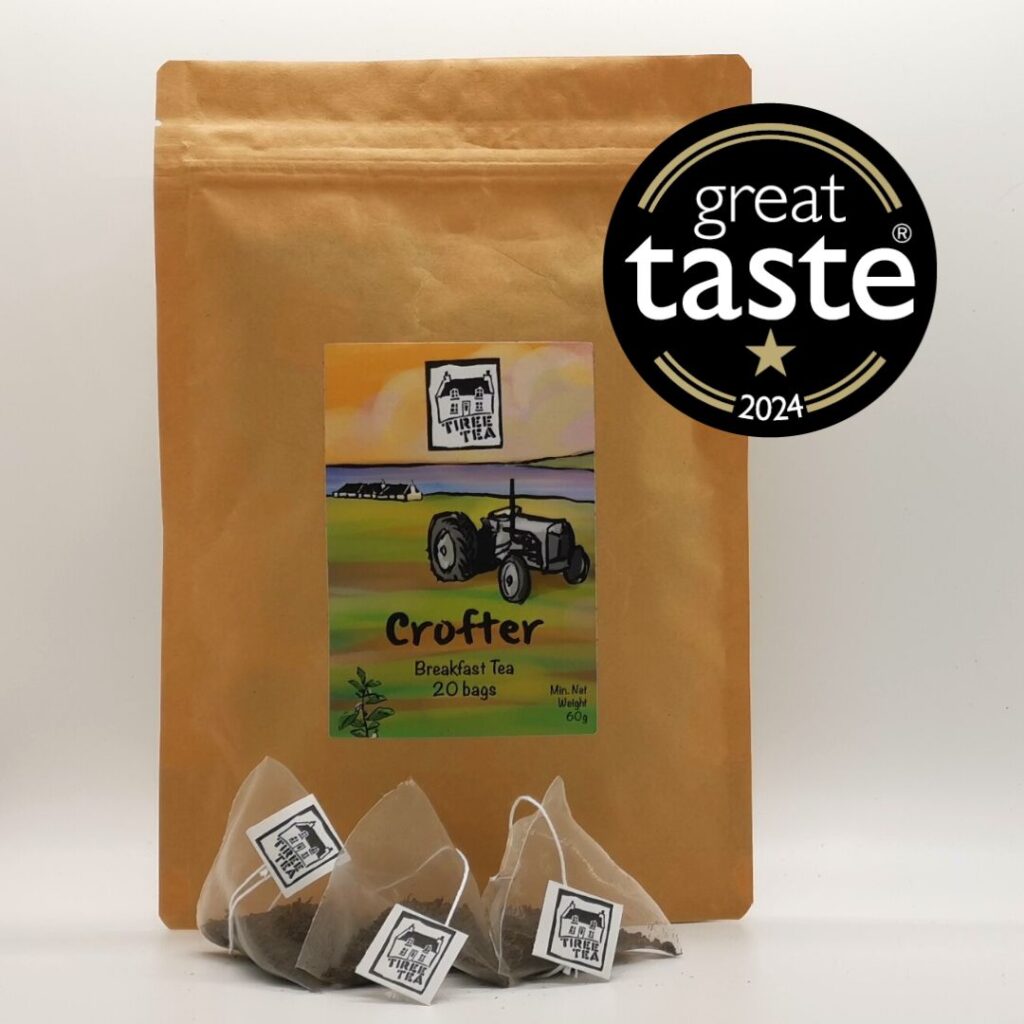
Crofter (Traditional Breakfast Tea)
A delicious breakfast tea that works anytime of day! Crofter is a robust tea – like the inspiration behind it. Highly rated, this firm favourite is here to stay. Meet the wee grey fergie tractor.